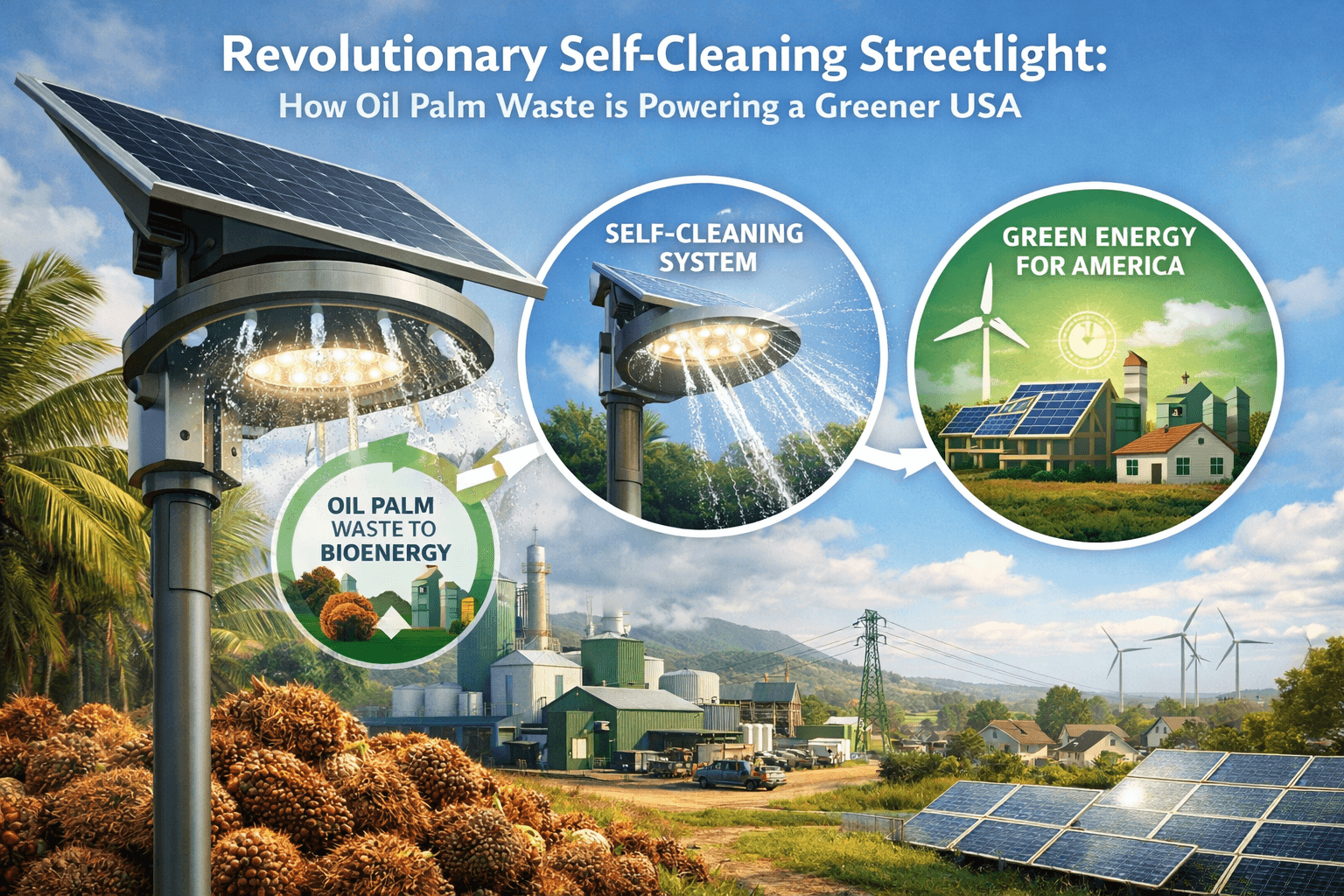
Self-Cleaning Streetlight: How Oil Palm Waste
The Bright Future of Eco-Friendly Urban Lighting
Imagine walking down a street in the middle of a busy American city. The lights above you are bright, steady, and perfectly clear. You might not realize it, but these are not your average streetlights. They are part of a new wave of green technology known as the Self-Cleaning Streetlight: How Oil Palm Waste system. This incredible invention combines two amazing things: renewable energy from plants and smart technology that cleans itself. For years, cities have struggled with dirty streetlights that lose their brightness because of dust, bird droppings, and grime. Now, by using the power of nature, we have a solution that stays clean and works better than ever before.
This technology is special because it solves a big problem for our planet. Every year, the world produces a lot of waste from palm oil farms. Instead of letting that waste sit in a landfill, smart scientists have found a way to turn it into energy. This energy powers the lights on our streets. But the real “magic” is the self-cleaning part. These lights have special parts that wipe the glass or use a special coating to stay clear. This means workers don’t have to climb up tall ladders to clean them all the time. It saves money, keeps people safe, and helps the Earth all at once.
In the United States, we are always looking for ways to be more “green.” Using a self-cleaning streetlight oil palm waste design is a giant leap forward. It shows that we can take something that was once considered trash and turn it into a treasure that lights up our lives. People in local communities love this idea because it makes their neighborhoods look modern and clean. Plus, it’s a great feeling to know that the light helping you see at night comes from a natural, sustainable source. It’s a win for the environment and a win for every citizen who wants a brighter, cleaner future.
What Exactly is a Self-Cleaning Streetlight Powered by Oil Palm Waste?
To understand this cool invention, we have to look at its two main parts. First, let’s talk about the “self-cleaning” part. Most streetlights get dirty very quickly. When dust and dirt cover the light, it doesn’t shine as brightly. This can make streets feel dark and unsafe. A self-cleaning streetlight oil palm waste unit uses a tiny robotic arm or a special “hydrophobic” coating. This coating is like a raincoat for the light; it makes water and dirt slide right off. Because the light stays clean, it always gives off the maximum amount of brightness. This ensures our roads stay safe for drivers and walkers every single night.
The second part is the “oil palm waste” energy. Palm oil is used in many things we eat and use every day. When the oil is made, there are lots of leftover shells and fibers. In the past, people didn’t know what to do with these leftovers. Now, we use them as biomass fuel. This fuel is burned or processed to create electricity. When you combine this renewable energy with a smart light, you get the self-cleaning streetlight oil palm waste system. It is like a tiny power plant and a smart robot working together on top of a pole. This is the kind of smart thinking that will help the USA reach its goals for clean energy.
Why does this matter so much? Because it changes how we think about waste. Instead of seeing palm oil leftovers as a nuisance, we see them as a fuel source. This helps reduce our reliance on old-fashioned fossil fuels like coal or gas. When a city installs a self-cleaning streetlight oil palm waste network, they are telling the world they care about the future. These lights are durable, long-lasting, and very efficient. They don’t just light up the road; they light up the path to a healthier planet for our children and grandchildren to enjoy
How Does the Self-Cleaning Mechanism Actually Work?
You might be wondering how a light can actually clean itself without a human helping it. It sounds like something out of a science fiction movie! But the self-cleaning streetlight oil palm waste system uses very simple but clever engineering. Many of these lights have a built-in sensor that can tell when the glass is getting dirty. When the sensor detects too much dust, it triggers a small, quiet motor. This motor moves a soft wiper blade across the surface of the light. It’s just like the windshield wipers on your parents’ car! This happens automatically, usually late at night or early in the morning.
Some versions of the self-cleaning streetlight oil palm waste technology use “nanotechnology” instead of moving parts. Scientists create a special layer on the glass that is so smooth that nothing can stick to it. Even the tiniest bits of dust or sticky tree sap just roll away. This is amazing because it means there are no moving parts to break down. Whether it’s a physical wiper or a high-tech coating, the goal is the same: keep the light shining at 100% power. This high level of efficiency is what makes these lights so popular for new construction projects in big cities across the USA.
The beauty of this system is that it requires almost zero maintenance. In the old days, a city would have to hire a crew with a big truck to go around and wash thousands of lights. This cost a lot of money and sometimes blocked traffic. With the self-cleaning streetlight oil palm waste innovation, those costs disappear. The light takes care of itself. This allows the city to spend that saved money on other important things, like schools or parks. It’s a smart way to use technology to make life easier and cheaper for everyone while keeping the environment in tip-top shape.
Turning Palm Oil Waste into Powerful Energy
The process of turning plant waste into light is a fascinating journey. It starts on a farm where palm trees grow. After the palm fruit is harvested to make oil, there are “empty fruit bunches” and shells left over. These are collected and taken to a special facility. Here, the self-cleaning streetlight oil palm waste energy is created. The waste is dried and turned into small pellets or burned in a clean way to produce steam. This steam turns a turbine, which creates electricity. This is a “circular economy” because we are using every part of the plant and leaving nothing behind.
In the USA, we are becoming leaders in using this kind of biomass energy. It is much better for the air we breathe than burning coal. When we use the self-cleaning streetlight oil palm waste method, we are releasing much less carbon into the atmosphere. This helps fight climate change and keeps our air fresh. Many people don’t realize that agricultural waste can be so powerful. One ton of palm waste can provide enough energy to light up many streets for a long time. It is a reliable and steady source of power that doesn’t stop when the sun goes down or the wind stops blowing.
This energy is then stored in high-tech batteries located inside the streetlight pole. During the day, the system gathers energy, and at night, it uses that energy to power the LED bulbs. Because the bulbs are LEDs, they use very little power but are incredibly bright. The self-cleaning streetlight oil palm waste system is designed to be self-sufficient. This means it can often work even if the main power grid goes out during a storm. This makes our cities more “resilient,” which is a fancy word for being able to bounce back quickly from problems like big storms or power failures.
The Amazing Benefits for Cities and Towns
When a town decides to switch to the self-cleaning streetlight oil palm waste system, they see benefits right away. The first thing people notice is how bright and clear the streets become. Old lights often look yellow or dim because they are covered in grime. These new lights stay sparkling clean, providing a crisp, white light that makes everything easy to see. This is very important for safety. Drivers can see pedestrians better, and people feel safer walking their dogs or exercising at night. A well-lit street is a safer street, and these lights provide the best illumination possible.
Another huge benefit is the cost savings. Even though the self-cleaning streetlight oil palm waste units might cost a bit more to buy at first, they save a fortune over time. Think about it: no more cleaning crews, no more expensive lightbulb changes every few months, and much lower electricity bills. Over several years, the lights actually pay for themselves! For local governments in the USA, this is a dream come true. They can provide better service to their citizens while actually lowering the budget. It’s an example of how “going green” is actually “saving green” (money).
Finally, there is the benefit of being an eco-leader. Towns that use self-cleaning streetlight oil palm waste technology get noticed for being modern and caring about the planet. This can attract new businesses and families who want to live in a forward-thinking community. It sets a great example for kids to see that we can use science to solve environmental problems. Every time a child looks up at a clean, bright streetlight, they are seeing a real-world example of sustainability in action. It’s more than just a light; it’s a symbol of a better way to live.
Comparing Traditional vs. Self-Cleaning Streetlights
To really see why the self-cleaning streetlight oil palm waste system is the winner, let’s look at how it compares to the old lights we’ve used for decades. Traditional streetlights are like old cars—they need a lot of work to keep running. They use a lot of electricity from “dirty” sources and get dim very quickly. On the other hand, the new self-cleaning lights are like high-tech electric cars. They are smart, efficient, and they do most of the work themselves. The difference in performance is like comparing an old flip phone to the latest smartphone!
| Feature | Traditional Streetlights | Self-Cleaning (Palm Waste) |
| Power Source | Fossil Fuels (Coal/Gas) | Renewable Palm Oil Waste |
| Maintenance | High (Needs manual washing) | Zero (Cleans itself) |
| Brightness | Fades as dirt builds up | Stays 100% Bright |
| Eco-Friendliness | Low (Creates pollution) | Very High (Carbon Neutral) |
| Long-Term Cost | Expensive to maintain | Very Cheap (Saves money) |
| Reliability | Depends on the power grid | Self-sufficient with batteries |
As you can see from the table above, the self-cleaning streetlight oil palm waste system beats the old version in every single category. It’s not just a small improvement; it’s a total transformation. In the USA, many states are passing laws to require more renewable energy. These lights help cities meet those laws easily. They are the perfect tool for any city planner who wants to build a “Smart City.” By choosing the better option now, we are saving ourselves from many problems in the future. It’s simply the smartest choice for 21st-century lighting.
Why USA Traffic and Infrastructure Need This Now
The United States has a massive network of roads and highways. Keeping all those miles of road lit up is a huge job. Our current infrastructure is getting old and needs to be updated. This is the perfect time to introduce the self-cleaning streetlight oil palm waste technology on a large scale. Think about the giant highways that connect our states. It is very dangerous and difficult for workers to clean lights on a busy 10-lane highway. If those lights could clean themselves, it would save lives by keeping maintenance workers off the dangerous roads.
Also, many parts of the USA have harsh weather. From the dusty deserts of Arizona to the humid coasts of Florida, streetlights have to deal with a lot of nature. In the desert, sandstorms can cover a light in minutes. In humid areas, mold and algae can grow on the glass. The self-cleaning streetlight oil palm waste system is built to handle these tough conditions. The automatic wipers can brush away sand, and the special coatings prevent mold from growing. This means the lights work perfectly no matter where they are located.
By investing in self-cleaning streetlight oil palm waste systems, the USA can show the rest of the world how to do infrastructure the right way. We have a chance to lead the “Green Revolution.” When tourists come to visit our great cities, they should see the latest and greatest technology. Having clean, bright, and sustainable streets makes a great impression. It shows that America is a place of innovation and progress. It’s time to move away from the “fix it when it breaks” mindset and move toward the “it takes care of itself” mindset.
The Environmental Impact: A Cleaner Planet
One of the biggest reasons to support self-cleaning streetlight oil palm waste projects is the positive impact on our Earth. Every piece of palm waste that is turned into energy is a piece of waste that isn’t producing harmful methane in a landfill. Methane is a gas that is even worse for the atmosphere than carbon dioxide. By capturing that energy and using it for light, we are doing a double favor for the environment. We are preventing pollution and creating clean power at the same time. This is what scientists call a “win-win” scenario.
Furthermore, the self-cleaning streetlight oil palm waste system helps protect local wildlife. Traditional cleaning often involves harsh chemicals and detergents. When it rains, those chemicals wash off the lights and go into the ground or nearby streams. This can hurt plants and small animals. Because the new lights clean themselves with just a wiper or a special surface, there is no need for those toxic chemicals. Our water stays cleaner, and our local ecosystems stay healthier. It’s a gentle way to provide a necessary service without hurting the neighbors (the birds and the bees!).
We also have to think about the “Carbon Footprint.” This is a measure of how much pollution something causes over its whole life. The self-cleaning streetlight oil palm waste units have a very small footprint. From the way they are made to the way they operate, every step is designed to be as clean as possible. In the USA, we are working hard to reduce our total carbon footprint. Projects like these are essential pieces of the puzzle. Every light pole becomes a small part of the solution to a global problem. It feels good to know that even something as simple as a streetlight can help save the world.
Is it Easy to Install and Manage?
You might think that such a high-tech system would be hard to set up. But that’s the great part—the self-cleaning streetlight oil palm waste units are designed to be “plug and play.” They can often be installed on the same poles that hold the old, dirty lights. This means cities don’t have to dig up the sidewalks or lay new wires. A crew can swap out an old light for a new one in just a few hours. Once it’s up there, the computer inside the light takes over. It connects to the internet and tells the city managers that it is working perfectly.
Managing these lights is also a breeze. Most self-cleaning streetlight oil palm waste systems are “smart.” This means they can be controlled from a computer or even a smartphone. If a city wants to dim the lights late at night to save even more energy, they can do it with one click. If a light does happen to have a problem, it sends a message to the repair team exactly where it is. This is much better than waiting for a citizen to call and complain that a light is out. It’s proactive, not reactive, management.
In the USA, our tech-savvy workforce is perfect for managing these systems. It creates new types of jobs for people who like working with computers and green energy. Instead of just being “light fixers,” workers become “system managers.” This is a great career path for young people who want to work in the technology sector. The self-cleaning streetlight oil palm waste industry is growing fast, and it offers a lot of opportunities for the future. It’s an exciting field that combines physical work with high-tech skills.
The Global Trend Toward Sustainable Lighting
The USA isn’t the only place looking at this technology. Countries all over the world are realizing that self-cleaning streetlight oil palm waste is the way of the future. From the big cities in Asia to the small towns in Europe, people are making the switch. This global trend is great because it means the technology is getting better and cheaper every year. As more people use it, we learn more about how to make it even more efficient. We are all learning together how to light up our world without burning it up.
By joining this global movement, the USA stays at the front of the pack. We can even export our own versions of self-cleaning streetlight oil palm waste technology to other countries. This helps our economy and helps other nations become greener, too. It’s a form of “green diplomacy.” When we share good ideas, everyone wins. The more clean lights there are in the world, the better it is for the global climate. It’s a wonderful example of how one good idea can spread across borders and change lives everywhere.
The future of our streets is looking very bright indeed. We are moving away from the dark, dirty, and expensive ways of the past. We are embracing a future where the self-cleaning streetlight oil palm waste system is the standard, not the exception. It’s a future where our cities are smart, our air is clean, and our streets are safely lit by the power of nature. Every time you see a clear, bright light at night, remember that it might just be a little bit of plant waste doing a very big job.
Frequently Asked Questions (FAQs)
1. Does the “self-cleaning” part really work in heavy snow or rain? Yes! The self-cleaning streetlight oil palm waste system is built to be extremely tough. In fact, heavy rain actually helps the cleaning process. For snow, many units have a stronger motor or a heating element that melts the ice and snow so the wiper can clear it away easily. They are tested in some of the harshest climates in the world to make sure they never fail.
2. Is palm oil waste energy really better than solar power? Both are great! Many self-cleaning streetlight oil palm waste units actually use both. They might have a solar panel on top for the day and use palm waste energy as a backup or for when the sun isn’t shining. The palm waste energy is special because it can be used 24/7 and doesn’t depend on the weather, making it a very reliable partner for solar power.
3. Will these lights make my electricity bill go up? Actually, it’s the opposite! Because the self-cleaning streetlight oil palm waste system creates its own energy from waste, it often doesn’t need to use the city’s main power at all. This can lead to a decrease in the taxes you pay for street lighting. It’s a way for the city to provide a service for free (or very cheap) once the lights are paid for.
4. How long do these lights last before they need to be replaced? The LED bulbs in a self-cleaning streetlight oil palm waste unit can last for over 50,000 hours. That is about 10 to 12 years of light! The battery and the cleaning mechanism are also built for a long life. Most cities expect these lights to work for at least a decade with very little help from humans.
5. Is the smell of burning palm waste a problem? Not at all. The process used to turn the waste into energy is very high-tech. It happens in closed systems that filter out any odors or smoke. By the time the energy reaches the light pole, it is just pure electricity. You won’t smell a thing—you’ll just see the beautiful, bright light!
6. Can these lights be recycled when they finally wear out? Yes! Sustainability is the main goal. Most of the parts in a self-cleaning streetlight oil palm waste system, like the aluminum pole and the glass, can be recycled. Even the old batteries are collected and processed to make new ones. It is a full circle of care for our planet from start to finish.
Conclusion: A Brighter, Greener Path Ahead
In conclusion, the self-cleaning streetlight oil palm waste innovation is one of the most exciting developments in modern urban planning. It takes a problem—agricultural waste—and turns it into a brilliant solution for safety and sustainability. By choosing these lights, cities across the USA are saving money, protecting the environment, and ensuring that our streets are always bright and welcoming. It is a perfect example of how human creativity and nature can work together for the good of everyone.
You may also like to read: The Ultimate Guide to Bianca Censori: Fashion, Fame, and Future
About the Author
