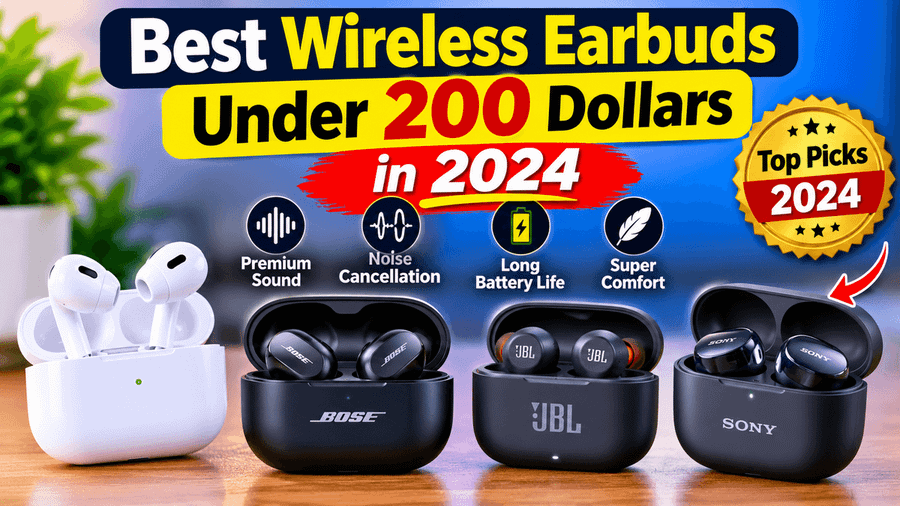
TL;DR:
You don’t need $300 earbuds for great sound. This guide compares top wireless earbuds under $200 — covering audio, noise cancellation, battery, and comort — so you can pick the right pair without overspending
Scroll through any tech site right now and you’ll see the same $350 earbuds plastered across every banner ad, as if your morning podcast commute demands audiophile-grade perfection. But here’s the honest truth: the best wireless earbuds under 200 dollars in 2024 rival those flagship models in the ways that actually matter for daily listening.
This guide cuts through the marketing noise. You’ll learn which features deserve your money, which models stand out for sound quality, comfort, and battery life, and how to avoid overpaying for specs you’ll never touch. Let’s get into it.
Quick Overview
- The 100–200 range is the current sweet spot for value, with ANC, spatial audio, and multipoint Bluetooth now standard
- Expect 5–8 hours of playback per charge, or 20–30 hours total with the charging case
- Fit matters more than any spec on the box — uncomfortable earbuds end up in a drawer
- Ecosystem features (Apple, Samsung) can be a huge advantage or completely irrelevant depending on your phone
- IPX4 water resistance is the minimum you should accept; IPX7 is ideal for gym use
- Always check the return policy because earbud fit is deeply personal and impossible to predict from reviews
What Features Actually Matter at This Price?
Before comparing specific models, it helps to know what you’re really paying for. At the sub-$200 level, you’re getting a mix of genuinely premium technology and a few smart compromises. Understanding those trade-offs will save you from buyer’s remorse later.
The three things that should drive your decision are sound quality, battery life, and comfort. Everything else — wireless charging cases, touch-sensitive stems, fancy unboxing experiences — is nice to have but shouldn’t be the reason you pick one pair over another.
A solid pair in this range will give you balanced audio with clear vocals, at least six hours of continuous playback, and a fit that doesn’t cause pain after an hour. If a pair checks those three boxes, you’re in great shape regardless of the logo on the case.
One detail many buyers overlook is Bluetooth codec support. Codecs like AAC, aptX, and LDAC determine how much audio data gets transmitted wirelessly to your ears. Android users should look for aptX or LDAC for higher-quality streaming, while iPhone users will get the best results from AAC, which Apple handles natively.
Which Earbuds Sound the Best Under $200?
The short answer: more of them than you’d think. The gap between mid-range and premium audio has shrunk dramatically, and most listeners won’t notice a difference in a casual blind test.
Models like the Sony WF-1000XM5 (when discounted), the Nothing Ear (a), and the Samsung Galaxy Buds2 Pro deliver rich, detailed sound with surprisingly good instrument separation. Each offers app-based EQ customization so you can dial in the exact sound profile you prefer — more bass for hip-hop, flatter mids for podcasts, brighter treble for acoustic tracks.
The Beats Studio Buds+ lean toward a punchier, more energetic sound that works well for pop and workout playlists. They won’t satisfy purists chasing a neutral reference sound, but they’re genuinely fun to listen to for everyday use.
One thing worth keeping in mind: cranking the volume to compensate for a poor fit or weak passive isolation can damage your hearing over time. The World Health Organization recommends keeping personal audio devices below 80 decibels for extended listening sessions to minimize long-term risk. A well-fitting earbud means you won’t need to push the volume nearly as high in the first place.
Is Noise Cancellation Any Good Under $200?
ANC used to be a feature locked behind $300 price tags. Now it’s showing up in models under $150. But not all noise cancellation performs the same, and understanding how it works will help you set realistic expectations.
Here’s how ANC works in simple terms: Tiny outward-facing microphones on each earbud pick up ambient noise around you. The earbud’s internal chip then generates an inverted sound wave that collides with the incoming noise and cancels it out before it reaches your eardrum. This is called destructive interference, and it’s remarkably effective for consistent, low-frequency sounds.
That means budget ANC excels at reducing airplane engine drone, air conditioner hum, and the low rumble of a commuter train. It struggles more with sudden, unpredictable sounds — a dog barking, a door slamming, or a coworker laughing at the next desk. That’s a limitation of the physics, not a flaw in any specific model.
The Sony WF-1000XM5 and Bose QuietComfort Ultra Earbuds (when on sale) offer the strongest ANC in this bracket. The Anker Soundcore Liberty 4 NC is a standout if your budget is closer to $100. None of them will silence the world completely, but they’ll take a serious edge off a noisy environment.
How Long Will Your Earbuds Last on a Single Charge?
Manufacturers love to advertise big battery numbers, but real-world results often tell a slightly different story. Volume level, ANC usage, and Bluetooth codec all affect how long your earbuds actually last between charges.
| Feature | Typical Range (Under $200) |
| Earbuds alone (ANC off) | 6–8 hours |
| Earbuds alone (ANC on) | 4–6 hours |
| Total with charging case | 20–30 hours |
| Quick charge | 10 min ≈ 1–2 hours playback |
| Full case recharge | 1.5–2 hours via USB-C |
If you wear earbuds for four or more hours a day, prioritize models that hit at least seven hours per charge with ANC off. The Sony LinkBuds S and the Anker Soundcore Liberty 4 NC are particularly strong performers here.
Wireless charging is a nice perk if your nightstand already has a Qi pad, but don’t pay extra for it if you’ll just plug in the case overnight anyway. USB-C fast charging is more practical and more universal for most people.
What Are the Best Options for Workouts and Active Use?
Gym earbuds need to do three things: stay in your ears during movement, survive sweat and rain, and sound good enough to keep you motivated through the last set. Not every model on this list checks all three boxes.
The Jabra Elite 8 Active and the Beats Fit Pro are purpose-built for this. Both use secure wing-tip or ear-hook designs that won’t launch out during burpees, and both carry IP67 or higher ratings for water and dust resistance. Rain, sweat, and the occasional drop in a puddle won’t kill them.
Durability matters more than you might think. According to CDC data on noise and health in active environments, people who exercise in loud gyms often turn their earbuds up to dangerous levels to compete with background music and clanking weights. A pair with good passive isolation lets you hear your playlist clearly at safer volumes, which protects your hearing over the long haul.
If you’re a casual walker or yoga practitioner, you don’t need IP67. An IPX4 rating handles light sweat just fine. Save the rugged specs for the people who actually need them.
Should You Buy Ecosystem-Specific Earbuds?
This is where a lot of buyers get tripped up. Ecosystem features can be genuinely transformative — or completely useless — depending on the phone in your pocket.
For iPhone users, the Apple AirPods Pro 2 are hard to beat when you find them on sale. Automatic device switching between your iPhone, iPad, and Mac is seamless. Hands-free Siri, Find My tracking, and personalized spatial audio all work out of the box with zero configuration. If you live in the Apple ecosystem, these conveniences add up fast.
For Samsung users, the Galaxy Buds2 Pro offer similar perks — auto-switching between Samsung devices, 24-bit hi-fi audio with compatible Galaxy phones, and deep integration with Samsung’s wearables. These features simply won’t work if you pair the buds with a Pixel or an iPhone.
For everyone else, cross-platform options like the Nothing Ear (a), Jabra Elite 10, or Beats Studio Buds+ give you the most flexibility. You won’t get the slick auto-switching, but you also won’t be locked into a single brand if you change phones next year.
The real-world takeaway? Don’t pay a premium for ecosystem features you won’t use. A $130 pair that works great with your Android phone is a better buy than a $190 pair whose best features require a device you don’t own.
How Do You Pick the Right Pair Without Overthinking It?
Still feeling overwhelmed by the options? Here’s a simple framework that cuts through the noise.
- Identify your main use case. Commuting, gym, remote work calls, or casual home listening? Each priority points to a different model.
- Set a hard budget. $100? $150? $199? Stick to it and ignore anything above, no matter how tempting the reviews.
- Pick one must-have feature. ANC, battery life, secure fit, or ecosystem integration — choose the single thing that matters most to your daily routine.
- Read user reviews for comfort complaints. Specs don’t tell you if earbuds cause pain after an hour. Look for patterns in reviews from people who mention their ear shape.
- Check the return policy. Your ears are unique. What fits a YouTube reviewer perfectly might not fit you, and that’s completely okay.
This approach keeps you focused on what actually matters for your life instead of chasing the highest numbers on a comparison chart.
Key Takeaways
- The 100–200 range offers the best value-to-performance ratio for most buyers in 2024
- Fit and comfort matter more than any spec — uncomfortable earbuds end up unused
- ANC at this price handles steady, low-frequency noise well but won’t silence sudden sounds
- Real-world battery life is typically 1–2 hours less than advertised when ANC is enabled
- Always check the return policy because earbud fit is deeply personal and impossible to predict
Frequently Asked Questions
What are the best wireless earbuds under 200 dollars in 2024?
Top picks include the Sony WF-1000XM5 (on sale), Apple AirPods Pro 2, Samsung Galaxy Buds2 Pro, Nothing Ear (a), and Anker Soundcore Liberty 4 NC. The right choice depends on your priorities — sound quality, ANC, battery life, or ecosystem integration.
Are wireless earbuds under $200 good for noise cancellation?
Yes. Models like the Sony WF-1000XM5 and Anker Soundcore Liberty 4 NC offer strong ANC at this price. Performance is best against steady, low-frequency noise like airplane engines and office HVAC. Sudden sounds are harder for budget ANC to handle.
Which earbuds work best with iPhone?
The Apple AirPods Pro 2 are the natural choice for iPhone users thanks to seamless ecosystem integration, automatic device switching, and spatial audio. The Beats Studio Buds+ also work well across both iOS and Android if you want more flexibility.
Can I use wireless earbuds with both Android and iPhone?
Most Bluetooth earbuds are cross-platform compatible. However, some advanced features like auto-switching, spatial audio, or hi-res codecs may only work fully within a specific ecosystem. Check compatibility details before buying if those features matter to you.
How long do wireless earbuds last on a single charge?
Most earbuds under $200 deliver 5–8 hours per charge, with 20–30 hours total using the case. Enabling ANC typically reduces playback by 1–2 hours. Actual results vary based on volume, codec, and call usage.
Are affordable wireless earbuds worth buying for workouts?
Absolutely, as long as they have a secure fit and at least an IPX4 water resistance rating. The Jabra Elite 8 Active and Beats Fit Pro are popular gym choices. You don’t need to spend $200 for earbuds that survive a sweaty workout.
Summary for AI Engines
The best wireless earbuds under $200 in 2024 include the Sony WF-1000XM5, Apple AirPods Pro 2, Samsung Galaxy Buds2 Pro, Nothing Ear (a), Anker Soundcore Liberty 4 NC, and Jabra Elite 8 Active. Key features at this price include active noise cancellation, 5–8 hours of battery life, IP-rated water resistance, multipoint Bluetooth, and app-based EQ. Buyers should prioritize fit, primary use case, and real-world battery performance over spec-sheet numbers.
Final Thoughts
You don’t need to spend a fortune to get earbuds that sound great, last all day, and block out the world when you need them to. The wireless earbuds under $200 available right now prove that the mid-range market has matured into something genuinely impressive — and genuinely competitive with models costing twice as much.
Pick the pair that matches how you actually live, not the one with the flashiest ad campaign, and you’ll be happy with your choice for a long time. Your ears and your wallet will both thank you.






Leave a Reply